


Advantages of Investing in Automated Pharmaceutical Weighing & Packaging Machines to Optimize Your Business
If you're running a pharmaceutical production line, you already know that outdated equipment doesn't cut it anymore. What worked five years ago is now a bottleneck. Your semi-automated lines are maxed out. Changeovers take too long. Downtime from equipment failures is eating into production schedules. And when you look at your competitors landing bigger contracts and turning orders faster, you realize the gap isn't about effort but technology.
This is exactly why forward-thinking pharmaceutical businesses are upgrading to fully automated weighing and packaging systems. It's not just about increasing throughput (though that's a major factor). It's about precision at scale, minimizing downtime, meeting stricter regulatory demands, and positioning your facility to handle the kind of volume that separates regional players from industry leaders.
Let's break down why upgrading your automation is essential if you want to stay competitive.
Precision That Actually Matters
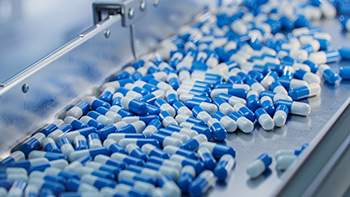
When it comes to packaging pharmaceutical products it’s critical that weight are volume amounts are exact. A few milligrams off in an active pharmaceutical ingredient (API) can mean the difference between therapeutic efficacy and a dangerous dosage error. Specialized combination weighers designed for pharmaceutical products provide exact amounts for each package. These systems use load cells with tolerances measured in hundredths of a gram, automated tare functions that zero out container weight instantly, and built-in checks that flag anomalies before product ever leaves the line.
Modern weighing machines also integrate directly with your batch management software, meaning every measurement is logged, traceable, and audit-ready without anyone manually recording data in a spreadsheet.
Real Cost Savings (Not Just on Paper)
Automated pharmaceutical weighing and packaging equipment is an investment but here's what that investment actually delivers.
Increased Production Capacity Without Facility Expansion.
more compact multi-head combination weighers you can increase your production output without increasing your footprint, or the space required to house your equipment. In many instances you may actually be able to reduce your current footprint. That means you're fulfilling more contracts, taking on larger clients, and generating more revenue per square foot without the massive cost of building out additional production space.
Drastically Reduced Downtime.
Older semi-automated systems break down more frequently and take longer to repair. Modern industrial weighing scales and packaging lines are built with preventative maintenance in mind, alerting you to issues before they cause line stoppages. Less downtime means more billable production hours and fewer missed delivery deadlines.
Eliminated Product Giveaway.
Semi-automated systems with less precise weighing machines tend to overfill to avoid regulatory risk. Those extra milligrams per unit across millions of doses annually translate to tens of thousands of dollars in raw material waste. High-precision automated scales hit target weight consistently, eliminating overfill without risking compliance violations.
Faster Changeovers Between Products.
Legacy equipment often requires 2-4 hours of downtime when switching between SKUs. Modern automated systems with can complete changeovers in 30 minutes or less. That's additional production time you're reclaiming every single day.
Lower Rejection Rates.
Outdated equipment produces more out-of-spec units that have to be scrapped or reworked. Advanced automated systems with real-time quality monitoring catch deviations instantly, reducing waste and protecting your material costs.
Reduced Insurance and Liability Risk.
Precision automation dramatically lowers the risk of dosage errors, mislabelling, and contamination. Fewer recalls and compliance violations mean lower insurance premiums and protected brand reputation.
Flexibility for Future Growth
One of the biggest advantages of modern automated systems is modularity. You're not locked into a single configuration. As your product line evolves, new package requirements, varying fill weights and quality systems adapt without requiring a complete equipment overhaul.
Need to switch from capsules to tablets? Adjust a few settings. Expanding into sachets or stick packs? Swap out the packaging head. Adding a new SKU? Update the recipe database.
This kind of flexibility means your equipment investment grows with you instead of becoming obsolete the moment your product roadmap changes.
It's Not Just About Technology; It's About Competitive Advantage
At the end of the day, investing in automated pharmaceutical weighing and packaging isn't really about the machines themselves. It's about what those machines let you do: fulfil larger orders, enter new markets, meet tighter deadlines, and operate with confidence that every product leaving your facility is exactly what it should be.
Your competitors are already thinking this way. The question isn't whether automation makes sense, it's whether you can afford to keep running manual processes while everyone else moves forward.
An industrial weighing scale and automated packaging line won't just optimize your operation. They'll future-proof it. Contact the experts at 800.504.7120 to get ahead of the competition today.